How Fighter Jets Survive Modern Air Defense Systems
How Fighter Jets Survive Modern Air Defense Systems
Air defense systems today are more sophisticated than in the past. Long-range radar networks, surface-to-air missiles (SAMs), electronic warfare systems, and integrated air defense networks (IADS) make it extremely dangerous for fighter jets to operate in contested airspace. Unlike the Cold War era, today’s aircraft face multiple layers of detection and interception that can engage targets hundreds of kilometers away.
Despite these threats, modern fighter jets continue to perform critical missions successfully. Thanks to breakthroughs in stealth technology, electronic warfare, artificial intelligence, precision weapons, and advanced pilot training, today’s combat aircraft can survive and operate in some of the world’s most heavily defended skies.
This article explains how fighter jets withstand contemporary air defense systems, the technologies they use, and why survival in contemporary air combat depends on much more than just speed.
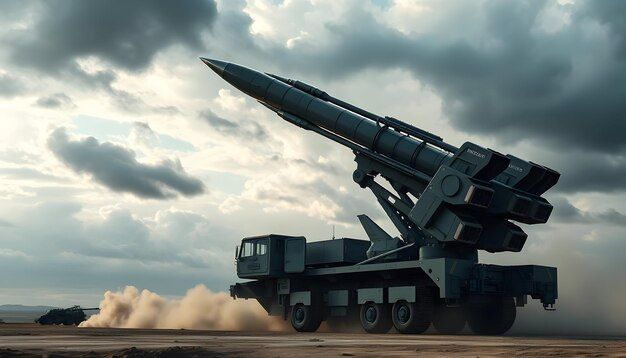
Understanding Modern Air Defence Systems
Prior to comprehending how fighter jets survive, it’s critical to realize the challenges they face.
In order to identify, track, and destroy enemy aircraft, modern air defense systems are made up of numerous interrelated parts.
Typically, an IADS (Integrated Air Defense System) consists of:
Long-range radars for surveillance
Radars that track targets
Surface-to-air batteries for missiles
Centers for command and control
Units of electronic warfare
Early warning systems in the air
Defense systems for short-range points
Modern air defenses are significantly more effective than solo missile systems because these parts exchange data in real time.
The Dangers of Modern Air Defense Systems
Modern missile systems are capable of:
Recognize aircraft hundreds of kilometers afar
Track several targets at once.
Engage stealth aircraft in specific situations
Avoid being jammed by electronics
Organize assaults from many launch locations.
Work in all weather situations, day or night.
As a result, a multi-layered defensive network is created that is challenging for attackers to breach.
How Fighter Jets Survive Modern Air Defense Systems.
1. Stealth Technology.
One of the best strategies for evading sophisticated air defenses is stealth.
In order to make them much more difficult to detect, modern stealth aircraft like the F-35 and F-22 are built to decrease their Radar Cross Section (RCS).
Among the stealth features are:
Materials that absorb radar
Weapon bays inside
Aircraft surfaces at an angle
Engine parts that are shielded
Diminished infrared signatures
Stealth limits detection range instead of rendering an aircraft invisible, enabling pilots to finish missions before enemy defenses can respond.
2. Electronic Warfare (EW)
One of the most effective survival strategies in contemporary air combat is electronic warfare.
Systems for electronic warfare can:
jam the enemy's radar
interfere with missile guidance
obstruct communication
Make up fictitious radar targets
Tracking systems that are confusing
Advanced electronic warfare suites that automatically identify radar signals and react in milliseconds are carried by many fighter aircraft.
3. Enemy Air Defense Suppression (SEAD)
Specialized aircraft frequently carry out Suppression of Enemy Air Defenses (SEAD) operations prior to entering strongly protected airspace.
Their goal is to:
Destroy radar stations
Destroy missile launchers
Interrupt enemy command centers
Get rid of tracking devices
Aircraft employ anti-radiation missiles that automatically target radar signals, compelling adversaries to either turn off their radar or run the danger of being destroyed.
4. Weapons of Stand-Off
Fighter jets are increasingly using long-range precision weaponry rather than flying directly over heavily protected targets.
Among them are:
Glide bombs and cruise missiles
Air-to-surface missiles with a long range
Precision-guided stand-off weapons
These weapons lessen risk to enemy fire by enabling pilots to strike from beyond the engagement range of many air defense systems.
5. Low-Altitude Flying
Radar shielding can be naturally provided by terrain.
Pilots frequently fly:
Through the valleys
Along mountain ranges
Near the ground
Masking the terrain
This shortens the time hostile missile systems have to react and decreases the possibility of early radar detection.
Even at high speeds, modern terrain-following radar helps pilots maintain safe low-level flight.
6. Countermeasures and Decoys
In order to mislead oncoming missiles, modern fighter jets are equipped with a variety of defensive countermeasures.
Among them are:
Chaff
False radar reflections are produced by releasing thousands of tiny metallic strips into the atmosphere.
Flares
Infrared-guided missiles are diverted away from the aircraft by intense heat sources.
Decoys Towed
In order to divert incoming missiles away from the fighter, some aircraft use decoys connected by wires that mimic the aircraft’s radar signature.
7. Situational awareness and sophisticated sensors
Strong sensor fusion capabilities are a feature of modern fighters.
Pilots obtain information from multiple radars rather than just one:
AESA radar
IRST stands for Infrared Search and Track.
Systems for electronic support
Satellites
AWACS aircraft
Friendly combatants
Wingmen for drones
This all-encompassing battlefield image aids pilots in avoiding hazardous locations before they become targets.
8. Warfare Focused on Networks
Fighter jets of today rarely engage in solo combat.
In contemporary military operations, there is continuous communication between:
Fighter planes
Early warning aircraft in the air and satellites
Command centers on the ground
Naval ships
Wingmen for drones
Pilots can now detect dangers far earlier than in the past because to real-time information exchange.
9. Quick Maneuvrability
Maneuvrability continues to be a crucial survival factor if discovered.
Contemporary fighter aircraft carry out:
Defensive turns in high G
Quick ascents
Sharp dives
Rolls of barrels
Energy-saving techniques
Missile interception is made much more challenging by these motions.
Even with today’s highly agile missiles, their odds of survival can still be increased by competent pilots and sophisticated flight control systems.
10. Automation and Artificial Intelligence
Pilots are becoming aided by artificial intelligence through:
Automatically recognizing threats
Setting priorities for goals
Suggestions for escape routes
Overseeing electronic warfare systems
Observing the health of aircraft
During particularly stressful combat scenarios, AI lessens the effort for pilots, enabling quicker and more accurate decision-making.
11. Wingmen in Drones
It is anticipated that autonomous drone wingmen would operate alongside next-generation fighter aircraft.
These drones are capable of:
Examine the enemy's air defenses
Block hostile radar
Bring extra missiles.
Become decoys
Recognize missile launches
The risks for human pilots are greatly reduced when hazardous activities are delegated to drones.
12. Excellent Pilot Instruction
Survival cannot be ensured by technology alone.
Military pilots go through years of rigorous training, which consists of:
Evasion of missiles
Techniques for electronic warfare
Flying at low altitudes
Identification of threats
Operations for formation
Combat at night
Enemy air defenses were simulated.
Pilots are kept ready for contemporary combat situations by frequent drills against genuine dangers.
Technologies to Increase the Survivability of Fighter Jets
Several cutting-edge technology are combined in modern combat aircraft.
AESA Radar
AESA (Active Electronically Scanned Array) radar offers:
Greater range of detection
Improved monitoring of targets
Opposition to jamming
Monitoring several dangers at once
IRST stands for Infrared Search and Track.
IRST systems use heat instead of radar to identify hostile aircraft, enabling passive target tracking without disclosing the fighter’s location.
Fusion of Sensors
Sensor fusion creates a single, comprehensible tactical display by combining data from several onboard and external sources.
This enhances situational awareness and lessens the burden for pilots.
Safe Data Connections
Fighter aircraft can stay in contact with friendly forces thanks to encrypted communications, which protect mission information from enemy interception.
Difficulties Fighter Jets Face
Even with tremendous technological advancements, there are still several obstacles facing modern fighter aircraft.
Air Defenses with Multiple Layers
Overlapping missile systems with different capabilities and ranges are used by several nations.
Systems for Passive Detection
Passive sensors, which are more challenging to jam, are used in several contemporary air defense systems.
Missiles that are hypersonic
Because of their incredible speed, hypersonic weapons shorten reaction times.
Artificial Intelligence
AI may be used in future missile systems to enhance target tracking and lessen vulnerability to countermeasures.
The Survival of Fighter Jets in the Future
Future fighter planes will depend even more on:
Stealth technology of the sixth generation
Mission management with AI assistance
Self-governing drone wingmen
Defensive systems using directed energy
Stand-off hypersonic weapons
Communications that are immune to quantum
Advanced electronic warfare
Future survivability will come from combining several systems into a single, highly interconnected battle network rather than depending on a single technology.
In conclusion
Fighter planes continue to exist by combining stealth, electronic warfare, precision weaponry, advanced sensors, network-centric operations, and highly skilled pilots, despite the fact that modern air defense systems are among the most advanced weapons ever created.
Speed and maneuverability are no longer the only factors that determine survivability. Rather, it relies on lowering detection, interfering with adversary sensors, launching long-range strikes, and upholding superior situational awareness.
The future of air combat will be determined by the collaboration of fighter jets, autonomous drones, artificial intelligence, and sophisticated electronic warfare systems as technology advances. In the conflicts of the future, air superiority will be maintained by aircraft that can adjust to more complicated air defense settings.
FAQs, or frequently asked questions
1. What is a contemporary air defense system?
In order to identify, track, and eliminate hostile aircraft and missiles, a contemporary air defense system consists of an integrated network of radars, missile launchers, command centers, and electronic warfare systems.
2. How do fighter jets evade being picked up by radar?
By using stealth technologies, radar-absorbing materials, carefully designed airframes, internal weapon bays, and low-observable design elements that lower their radar cross-section, fighter aircraft lessen radar detection.
3. What does fighter jet electronic warfare entail?
Using onboard technologies to jam enemy radar, interfere with communications, trick missile guidance, and shield the aircraft from discovery and assault is known as electronic warfare.
4. What are flares and chaff?
While flares are heat-producing decoys designed to divert infrared-guided missiles away from the aircraft, chaff is made up of small metallic strips that mislead radar-guided missiles.
5. Describe a SEAD mission.
Finding, interfering with, or eliminating enemy radar and surface-to-air missile systems prior to or during an air operation is the goal of the military mission known as SEAD (Suppression of Enemy Air Defenses).
6. Is it possible to identify stealth aircraft?
Indeed. Aircraft that fly stealthily are not invisible. They are far more difficult to find and interact with because of their design, which drastically reduces detection range and tracking efficacy.
7. How do drone wingmen contribute to the survival of fighter jets?
Drone wingmen reduce hazards for human pilots and increase overall mission success by conducting decoy missions, electronic warfare, reconnaissance, and target identification.
8. What makes pilot training crucial for survival?
Advanced tactics, missile avoidance strategies, low-level flying, electronic warfare protocols, and decision-making abilities that significantly increase battle survivability are taught to highly skilled pilots.
9. What innovations will make fighter jets more resilient in the future?
Advanced electronic warfare, directed-energy defenses, autonomous drone wingmen, sixth-generation stealth, AI-assisted combat systems, and hypersonic stand-off weaponry are examples of future technologies.
10. What makes situational awareness crucial in contemporary air combat?
By detecting threats early, avoiding hazardous airspace, coordinating with friendly troops, and making quicker tactical decisions, situational awareness greatly improves a pilot’s odds of survival.


