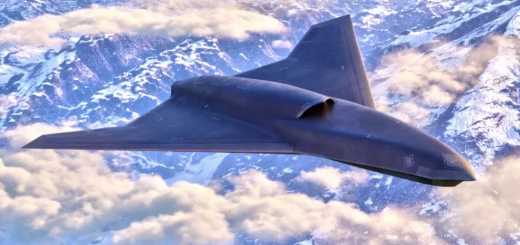
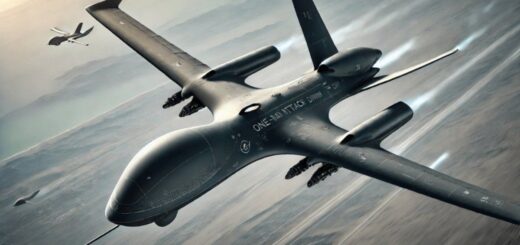
How Drone Wingmen Support Fighter Jets
How Drone Wingmen Support Fighter Jets
Fighter jets alone are no longer the mainstay of aerial warfare in the future. Manned-unmanned teaming (MUM-T), in which advanced autonomous drones fly alongside fighter aircraft to boost combat efficiency while lowering pilot hazards, is being used by today’s modern air forces.
These intelligent drones, sometimes referred to as drone wingmen or Loyal Wingman drones, are built to carry out a variety of tasks, such as precise strikes, electronic warfare, target identification, missile defense, and reconnaissance. Drone wingmen are force multipliers that increase the effectiveness and safety of every mission rather than taking the place of fighter pilots.
Billions of dollars are being invested in the development of these cutting-edge systems by governments such as the United States, Australia, China, Russia, and several European countries. Drone wingmen are anticipated to play a crucial role in next-generation air combat as artificial intelligence develops.
This article explains how drone wingmen assist fighter jets, the technology that underpin them, their operational benefits, present difficulties, and what lies ahead for this ground-breaking idea.
What is a Drone Wingman?
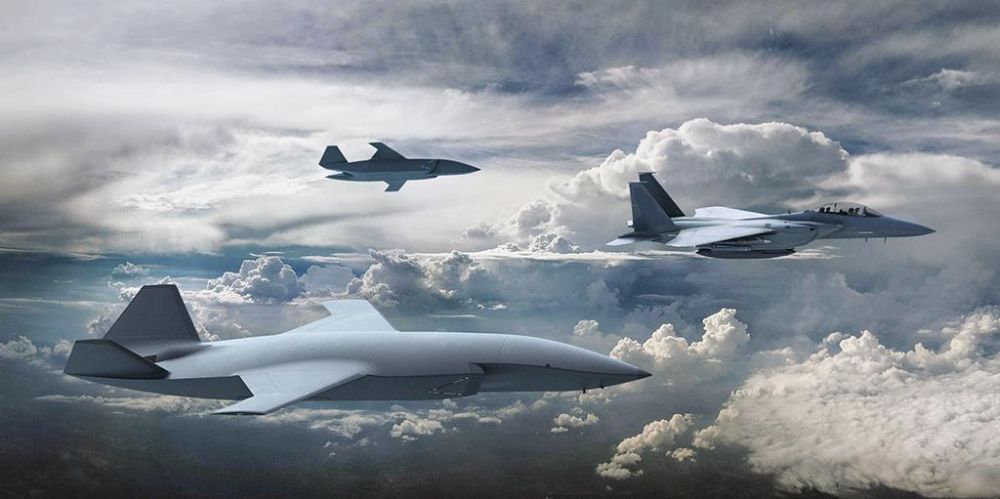
An autonomous or semi-autonomous unmanned aircraft intended to fly alongside a piloted fighter jet during military operations is known as a drone wingman.
Drone wingmen, in contrast to conventional remotely piloted drones that depend on operators thousands of miles away, can:
Automatically fly in formation
Exchange intelligence from the battlefield.
Bring weapons.
jam the enemy's radar
Defend friendly aircraft
Carry out risky tasks on your own
They are frequently referred to as Collaborative Combat Aircraft (CCA) or Loyal Wingman drones since they function as reliable allies.
The Need for Drone Wingmen in Modern Fighter Jets
Advanced air defense systems, stealth aircraft, electronic warfare, cyberattacks, and hypersonic weapons are all contributing to the complexity of today’s battlefields.
One pilot needs to keep an eye on:
Air hazards
Targets on the ground
Systems of radar
Aircraft that are friendly
Goals of the mission
Cyberattacks
Pilots are under tremendous pressure to handle all of these responsibilities at once.
By managing several supporting tasks, drone wingmen lessen this effort and free up pilots to concentrate on making tactical decisions.
How Fighter Jets Are Supported by Drone Wingmen
1. Intelligence and Surveillance on the Battlefield
Obtaining real-time combat intelligence is one of a drone wingman’s main responsibilities.
Using cutting-edge sensors like:
AESA radar
Cameras that use electro-optics
Infrared sensors
Systems of electronic intelligence
Thermal imaging
The drone continuously surveys the combat zone.
Before the fighter jet enters hazardous airspace, it detects hostile aircraft, missile launchers, radar stations, armored vehicles, and troop movements.
The pilot receives this information instantaneously, giving them better situational awareness.
Benefits
Early detection of threats
Improved planning for missions
Increased precision in targeting
decreased burden for pilots
2. Scouting and Flying Ahead
Commanders can send drone wingmen ahead of the formation rather than taking a chance on a costly fighter jet.
The drone investigates hostile territory by:
Looking for covert air defenses
Recognizing radar emissions
Locating missile launch locations
Finding hostile aircraft
No pilot is lost if the drone is found or destroyed.
During hazardous missions, this greatly lowers operational risk.
3. Bringing Extra Weapons
Each fighter jet has a certain amount of internal and exterior weaponry.
This issue is resolved by drone wingmen carrying extra:
Missiles that fly into the air
Bombs with precise guidance
Radiation-resistant missiles
Cruise missiles
Munitions loitering
This significantly boosts the formation’s overall firepower without changing the fighter planes.
Future drone wingmen might also serve as flying missile stockpiles, enabling fighter jets to fire missiles from surrounding drones.
4. Operations in Electronic Warfare
One of the most important elements of contemporary warfare is electronic warfare.
Drone wingmen are capable of carrying out electronic attack tasks like:
Jamming radar
Disruption of communication
GPS disruption
Generation of false targets
Gathering signal intelligence
Fighter aircraft operating in heavily defended settings are more likely to survive thanks to their characteristics, which also confuse enemy air defenses.
5. Taking up the role of Decoys
The first aircraft that an enemy radar system detects is usually engaged.
It is possible for drone wingmen to purposefully expose themselves to hostile radar.
When the enemy’s air defenses are activated:
Radar locations are visible
The presence of missile launchers
Targeting data is sent to fighter aircraft.
Then, while staying comparatively safe, the fighter aircraft can use stand-off weapons to kill such threats.
6. Aircraft Protection and Missile Warning
Cutting-edge drone wingmen are able to identify impending threats before the fighter pilot does.
They are able to recognize via radar warning receivers and infrared sensors:
Missiles that are approaching
Combatants from the enemy
launches of surface-to-air missiles
Drones that are hostile
Future designs might potentially use onboard defense systems to intercept incoming missiles and serve as protective escorts.
7. AI-Powered Air Warfare
Drone wingmen can make quick tactical judgments in combat thanks to artificial intelligence.
They benefit from their AI systems:
Monitor hostile aircraft
Continue to form
Steer clear of barriers
Suggested objectives
Work along with other drones
Human pilots are typically still in charge of approving the use of deadly force, even though AI manages normal operations.
8. Increasing Radar Coverage
Every fighter radar has limits due to aircraft placement, weather, and topography.
A distributed sensor network is created by several drone wingmen circling an aircraft.
When combined, they are able to identify:
Low-flying aircraft
Cruise missiles
Stealth objectives
Drones of the enemy
Threats from the ground
Battlefield awareness is significantly enhanced by this larger surveillance area.
9. Operations in Swarms
One fighter plane may be able to concurrently manage several drone wingmen in future air battle.
These swarms of drones can:
Attack several targets
Perform reconnaissance
Attack enemy defenses with escort bombers
Instantaneously share intelligence
By posing multiple threats at once, swarm tactics overwhelm opponent defenses.
10. Increasing Mission Durability
Certain drone wingmen are able to stay in the air longer than combat jets.
They can go on:
Keeping an eye on enemy movements
Monitoring objectives
Giving intelligence
assisting with subsequent strike operations
Commanders have a major tactical advantage because of this enduring presence.
The Technology Underpinning Drone Wingmen
AI, or artificial intelligence
AI enables drones to:
Go on your own
Examine the risks
Identify targets
Adjust to shifting situations on the battlefield
Work together with other aircraft
Mission performance is continuously enhanced by machine learning.
Safe Data Connections
Encrypted communication technologies are used by drone wingmen to communicate with:
Pilots of fighters
Additional drones
Satellites and aerial command centers
Electronic interference and hacking are prevented by secure communications.
Advanced Suites of Sensors
Several sensor types are used concurrently by modern drone wingmen, such as:
AESA (Active Electronically Scanned Array) radar
IRST stands for Infrared Search and Track.
Electro-optical cameras with high definition
Measures of Electronic Support (ESM)
Designators for laser targets
When combined, these sensors provide a complete image of the battlefield.
Systems for Autonomous Flight
Drones with autonomous flight technology can:
Take off on your own
Keep your formation exact.
Prevent collisions
Handle challenging terrain
Automatically land
By using these systems, the pilot may concentrate on fighting instead of operating the drone.
Drone Wingmen’s Advantages
There are many operational benefits to using drone wingmen.
Increased Pilot Security
Drones can be used instead of human pilots for risky reconnaissance and suppression operations.
Increased Firepower
The formation’s combat capability is enhanced by additional weaponry carried by drones.
Enhanced Awareness of Situations
The battlefield is significantly more clearly understood when multiple sensor platforms are used.
Reduced Operating Expenses
Compared to sophisticated combat aircraft, drone wingmen are typically significantly less expensive to construct and operate.
Increased Flexibility in Mission
Drone wingmen are able to quickly transition between electronic warfare, striking, observation, and escort duties.
Multiplication by Force
Support from many autonomous drones greatly increases the capability of a single fighter jet.
The Difficulties Drone Wingmen Face
They still face a number of obstacles despite their great potential.
Risks to Cybersecurity
The enemy might try to:
Communication hacking
Signals for jam control
Add fictitious data
Interrupt AI systems
Robust cybersecurity protocols are crucial.
Moral Issues
Many countries maintain that decisions involving the use of lethal force must still be made by human operators.
It’s still difficult to strike a balance between human monitoring and AI autonomy.
Communication Dependability
Communications between fighters and drones may be hampered by electronic warfare.
Future systems are being built to function even in the event of a temporary loss of communication links.
Development Expenses
Advanced autonomous drones are less expensive than fighter jets, yet they still need costly:
Sensors
AI programs
Integration of weapons and flight computers
Extensive testing
Nations Creating Drone Wingmen
The development of loyal wingman technology is being spearheaded by a number of countries.
The United States
The goal of the U.S. Air Force’s Collaborative Combat Aircraft (CCA) program is to connect autonomous drones with future sixth-generation fighters and aircraft like the F-35.
Australia
One of the earliest operational faithful wingman aircraft in history is Australia’s MQ-28 Ghost Bat, created by Boeing Australia.
China
In order to support cutting-edge stealth warplanes like the J-20, China is quickly creating AI-enabled combat drones.
Russia
Unmanned combat aircraft designed to operate alongside the Su-57 fighter are still being tested in Russia.
Europe
Future combat air system (FCAS) programs in Europe will incorporate loyal wingman concepts.
Drone Wingmen’s Future
Drone wingmen are expected to become regular equipment for modern air forces in the next ten years, according to military analysts.
Potential future capabilities could be:
Completely independent reconnaissance
Dogfighting with AI assistance
Drone escorts that are hypersonic
Precision long-range attacks
Self-sufficient aerial refueling
Swarms of cooperative drones
Space-based battlefield networking
By combining human judgment with machine speed and endurance, drone wingmen will increase fighter pilots’ effectiveness rather than replace them.
In conclusion
By fusing the skills of human fighter pilots with artificial intelligence, autonomous flight, sophisticated sensors, and precision weapons, drone wingmen are revolutionizing contemporary air combat.
While keeping pilots farther away from danger, these intelligent unmanned aircraft offer additional firepower, electronic warfare, target acquisition, missile defense, and surveillance. The combination of autonomous drones and manned fighter jets will redefine air superiority and become a key component of future combat as military technology develops.
The days of fighter jets flying alone are drawing to a close. Collaborative combat teams, in which humans and intelligent machines battle together to increase effectiveness, survivability, and mission success, are the way of the future.
FAQs, or frequently asked questions
What is a drone wingman?
An autonomous or semi-autonomous unmanned aircraft that flies beside a fighter jet for tasks including electronic warfare, surveillance, target identification, reconnaissance, and strike support is known as a drone wingman.
How do fighter jets benefit from drone wingmen?
By gathering intelligence, carrying additional weaponry, blocking enemy radar, serving as decoys, identifying hazards, and raising overall combat awareness, drone wingmen assist fighter jets.
Can drone wingmen function without human supervision?
These days, drone wingmen are capable of flying on their own and carrying out a variety of activities. However, before using any deadly weaponry, the majority of military units need human approval.
Do drone wingmen take the place of fighter pilots?
No, drone wingmen are not meant to replace fighter pilots; rather, they are meant to support and improve them. Crucial combat decisions and mission planning are still the responsibility of human pilots.
Which nations are working on drone wingman technology?
Loyal wingman and cooperative combat aircraft programs are being actively developed by the United States, Australia, China, Russia, and several European nations.
What weapons are drone wingmen capable of carrying?
Drone wingmen may carry anti-radiation missiles, cruise missiles, precision-guided bombs, air-to-air missiles, and loitering weapons, depending on the mission.
What are drone wingmen’s main benefits?
Improved pilot safety, increased firepower, improved reconnaissance, reduced operating expenses, improved electronic warfare capabilities, and superior situational awareness are the key benefits.
What difficulties do drone wingmen encounter?
AI decision-making, communication interference, cybersecurity risks, ethical issues, and the high expense of creating sophisticated autonomous systems are some of the main obstacles.
What distinguishes a conventional military drone from a drone wingman?
Conventional military drones are typically operated remotely by ground-based personnel. Drone wingmen complement human pilots by flying alongside fighter jets, working together in real time, and making independent judgments thanks to sophisticated artificial intelligence.
How will drone wingmen fare in the future?
Future drone wingmen will be an essential part of air warfare since they are anticipated to have advanced AI, swarm capabilities, longer endurance, hypersonic technologies, and seamless integration with sixth-generation fighter aircraft.