Why the F-22 Raptor Still Has No Equal in 2026
Why the F-22 Raptor Still Has No Equal in 2026
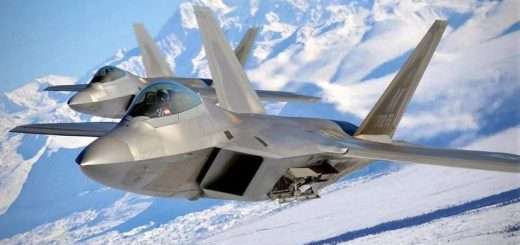
When it comes to the world’s most renowned fighter planes, the F-22 Raptor continues to stand out. More than two decades later, and even in 2026, no operational fighter can equal the Raptor’s mix of stealth, speed, supercruise, sensor fusion, agility, and air-to-air superiority. The jet may not be the most recent name in military aviation, but it maintains the standard for what an air superiority fighter should be. Lockheed Martin still portrays it as the standard for air dominance, and the aircraft continues to get updates rather than being recognized as an obsolete platform.
The military aviation world has evolved rapidly. New stealth fighters have joined service. Sixth-generation fighter ideas are in development. Advanced air defense systems are getting increasingly sophisticated and lethal. Despite this, the F-22 Raptor is still regarded as one of the most revered and feared combat aircraft in history.
So, why does the F-22 still have no equal in 2026? The reason is simple: the Raptor was created with one objective in mind: to rule the skies against the world’s greatest adversary aircraft. Other fighters have attempted to become more flexible by including air-to-ground, networking, and multirole capabilities, but the F-22 was designed from the start to be a pure air superiority vehicle. That emphasis still provides it a significant advantage.
This essay discusses why the F-22 Raptor is still unmatched, how its distinctive design keeps it relevant, and why, even in an era of newer jets, it maintains the benchmark by which air superiority is evaluated.
1. The F-22 was built to win the air war
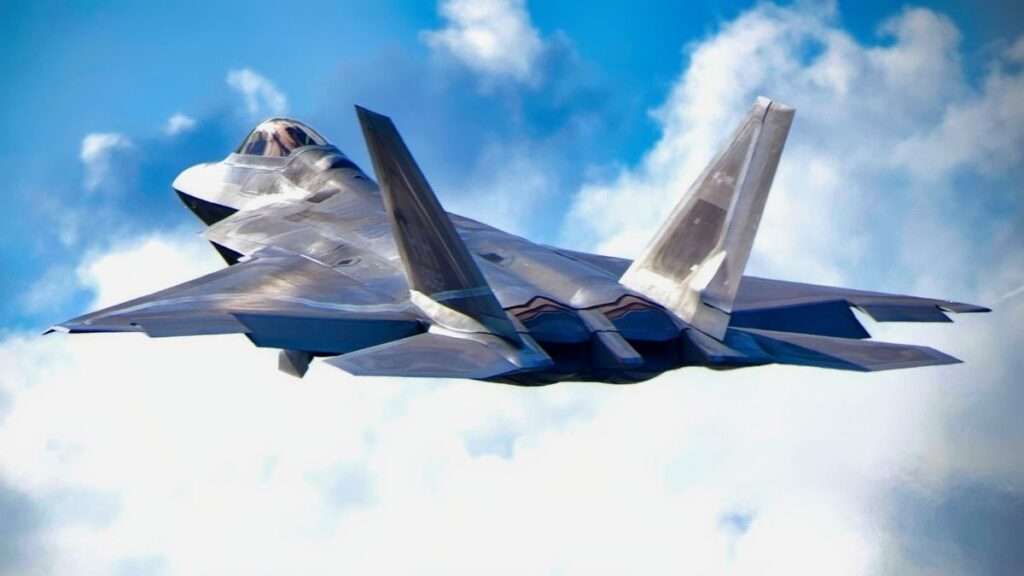
Many contemporary fighter planes are intended to perform a variety of tasks satisfactorily. The F-35, for example, is an extremely competent multirole stealth aircraft. It can attack ground targets, collect intelligence, relay combat data, and fight from the air. The F-22, on the other hand, was designed with a more specific goal in mind: to eliminate adversary fighters before they are aware of their presence.
That mission focus is important. Because the F-22 did not have to make as many compromises for multirole adaptability, it developed outstanding strength in the areas that characterize air dominance. Its design focuses on stealth shape, high-end maneuverability, good radar performance, high altitude performance, and sustained speed. Simply put, it was designed to chase the world’s most deadly aircraft—which makes it scary even now.
That level of specificity remains important in real-world conflict strategy. Before bombers, tankers, observation aircraft, or attack fighters can fly safely, the skies must be cleared. That is where the F-22 continues to shine the brightest.
2. Stealth Still Matters in 2026
The F-22’s stealth is a fundamental reason why it continues to be unrivaled.
Stealth is more than simply being unseen. That’s a myth. Real stealth entails being difficult to detect, track, and target. From the beginning, the F-22 was designed with limited observability in mind. Its shape, internal weapons bays, carefully engineered inlets, radar-absorbent materials, and low heat signature all work together to restrict the range at which foes may effectively engage it. Lockheed Martin and long-standing technical explanations of the aircraft both emphasize these design decisions as critical to the Raptor’s edge. Even in 2026, stealth remains a significant advantage. Radar technology has improved. Indeed, current sensors are more sophisticated. However, a fighter who can avoid discovery still has the advantage, and in air warfare, the initial move might be the difference between victory and defeat.
The F-22’s stealth becomes even more potent when paired with its other qualities. It is not only a stealth aircraft. It is a stealth aircraft capable of flying rapidly, turning sharply, processing information quickly, and launching weapons from an advantageous position. That combination is what makes it so tough to counter.
3. Supercruise Gives the Raptor a Deadly Edge
One of the most well-known F-22 benefits is supercruise—the ability to fly at supersonic speeds without utilizing afterburners. This is a big deal in military aviation.
Why? Because afterburners utilize a lot of fuel, they produce a larger infrared signature. If a fighter can go at high speeds without them, it has higher efficiency, faster response time, and lower visibility than planes that require afterburners to perform the same job. The F-22 can enter position faster, intercept threats more effectively, and launch assaults while preserving excellent kinematic performance. That implies its missiles can benefit from improved launch circumstances. In air warfare, speed and altitude are more than simply nice bonuses; they actually influence who gains the tactical edge.
Many fighters can move quickly in short spurts. Few can combine stealth and sustained supersonic flying as well as the F-22. This is one of the reasons why the airplane still feels ahead of its time.
4. It dominates both beyond and inside visual range
Some fighters excel at long-range encounters but struggle in close-quarters dogfighting. Others are incredibly nimble, but lack the comprehensive sensor and stealth package required for contemporary air combat. The F-22 is deadly in both scenarios.
Beyond visual range, the Raptor’s superior radar, low observable architecture, and sensor fusion allow it to identify, track, and engage threats before being noticed. Its internal missile carriage maintains stealth, while its avionics allow the pilot to make faster and more informed judgments. Within visual range, the F-22 remains one of the nimblest fighters ever produced. Its thrust-vectoring nozzles provide superior mobility, particularly in high-angle engagements. That means that even if an enemy survives the long-range battle and gets close, the Raptor remains a terror to face.
This dual-threat capability is a major reason why the F-22 is still so regarded. It is more than just a first-shot combatant. It is also a last-ditch weapon.
5. Sensor fusion and situational awareness help pilots stay ahead
Modern air warfare is more than just who has the most powerful engine or the sharpest turn. It is becoming increasingly important to have excellent knowledge.
The F-22 was groundbreaking because it combined data from various sensors into a more complete tactical picture for the pilot. Rather than overloading the pilot with raw data, the aircraft aids in the conversion of data into awareness. This means faster judgments, less effort, and greater confidence in high-pressure circumstances. Technical reports of the Raptor’s avionics and sensor fusion continue to highlight this as one of its key capabilities. This is more important than ever in 2026. The skies are congested with data lines, electronic warfare threats, drones, smart missiles, and intricate sensor networks. A pilot who understands the combat faster than the opposition has a significant advantage.
The F-22 may not be the most recent fighter in the arsenal, but it was much ahead of its time in this regard, and that early advantage still pays dividends.
6. The Raptor is Still Being Modernized
One of the most common misconceptions about the F-22 is that it is outdated and no longer relevant. This is simply not true.
The aircraft continues to get modernization assistance, and a report in early 2026 indicated continued upgrade activities, including development on new external tanks and broader “Raptor 2.0” talks. There have also been allegations that Lockheed Martin has suggested upgrading more training-configured Block 20 aircraft to combat-ready standards, demonstrating that the platform is still considered strategically useful rather than outdated. This is significant since significance in contemporary combat is determined by more than just chronological age. The question is whether the platform can adapt. The F-22 is certainly still capable.
The United States Air Force would stop investing in the Raptor if it no longer provided distinctive value. The fact is the opposite: the F-22 is still so effective that upgrading it makes perfect sense until a true next-generation successor is available.
7. No true operational replacement exists yet
Many individuals feel that newer always implies better. In actuality, that is not often how military aircraft operates.
Yes, sixth-generation programs are moving forward. Yes, the future of air combat will include new technology. However, in 2026, those systems are not yet extensively deployed as full operational replacements for what the F-22 accomplishes now. Even the Air Force’s long-term planning still sees the F-22 as a necessary bridge until the next generation comes in sufficient numbers. That puts the Raptor in a strong position. It is not simply a heritage emblem held alive for nostalgic reasons. It remains one of the greatest options for high-end air domination today.
Until another fighter can replicate the F-22’s identical combination of stealth, supercruise, altitude, agility, and air combat emphasis in an operationally proven manner, it will remain the dominant fighter.
8. Maintain combat credibility and strategic value to keep it relevant
The F-22 isn’t only stunning on paper. It has consistently been regarded as a high-value asset in major military operations and deterrent missions. The Raptor has been used to convey strength, reassure friends, and deter foes. Open-source reporting in 2026 also shows that the F-22 will continue to be involved in major regional operations, demonstrating that it is still trusted for front-line jobs.
That level of confidence says a lot.
Air forces rely on more than just reputation. They rely on aircraft that can survive, perform, and alter the tactical situation. The continuous deployment of the F-22 demonstrates that military planners still see it as one of the most competent fighters available for the most difficult missions.
9. The F-22’s primary edge is its balance
Many fighters excel in one area. Some are sneaky. Some are quick. Some are agile. Some have remarkable electronics.
The F-22’s brilliance is in its ability to integrate all of them at an extremely high level.
That equilibrium is incredibly unusual. If a fighter is incredibly stealthy but lacks mobility, it has a vulnerability. If it is extremely agile yet easily detected, it has a flaw. If it has a decent radar yet can’t sustain speed and altitude adequately, it has a flaw.
The F-22 addresses all of these flaws. It is not flawless, but the total package is nonetheless so formidable that no operational fighter in 2026 can decisively outperform it as a pure air superiority vehicle. Nostalgia is not the reason the F-22 Raptor remains unrivaled in 2026. It is performance.
The aircraft was designed for air domination, and it continues to provide a mix of stealth, supercruise, agility, sensor fusion, and combat relevance that few fighters can match and none have clearly surpassed in practical use. It is still being upgraded, is vital to US airpower plans, and represents the gold standard for what an air superiority fighter should be.
In a world full with modern military aircraft, the F-22 Raptor stands out because it does more than just compete; it defines the category.
That is why, even in 2026, the Raptor remains unmatched.