How Fighter Jet Pilots Survive in Combat with 9G Forces
How Fighter Jet Pilots Survive in Combat with 9G Forces
Among the most sophisticated devices ever created are contemporary combat planes. During air combat, aircraft such as the F-22 Raptor, F-16 Fighting Falcon, and F-35 Lightning II may execute very aggressive maneuvers. Pilots may experience forces as high as 9G, or nine times the force of gravity, during these maneuvers.
Such powerful pressures would instantly render an average person unconscious. However, fighter pilots are prepared to endure these harsh circumstances and even engage in combat. How do they accomplish this, then?
Advanced aircraft technology, physical training, specialized equipment, and rigorous physiological preparation are all part of the solution.
The science underlying G-pressures, how fighter jet pilots withstand 9G forces during battle, and strategies for maintaining consciousness while flying at the edge of human limitations will all be covered in this article.
What Does “9G” Actually Mean?
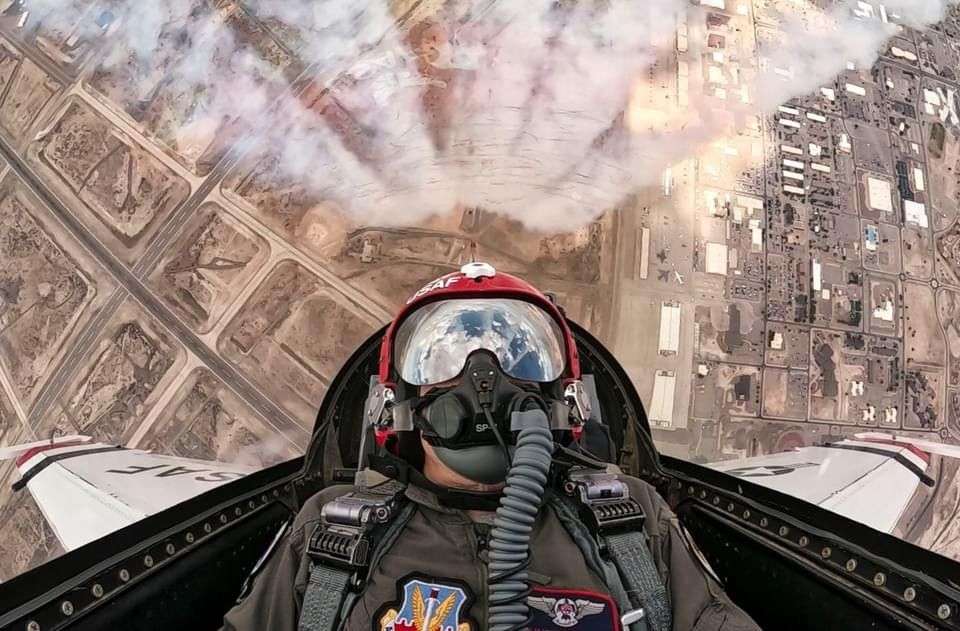
To understand how pilots withstand 9G, we must first understand what G-force is.
A G-force is the acceleration force exerted on the human body. On Earth, the usual gravitational force is one G. When a fighter plane makes a high-speed turn or a quick maneuver, the pilot feels the force numerous times.
For example:
1G – Normal gravity when standing on Earth.
3G – It feels like your body weighs three times greater.
6G – Blood starts draining from the brain.
9G – The body weighs nine times more than usual.
At 9G, a pilot who ordinarily weighs 80 kg will feel like they weigh 720 kg. Even raising an arm or moving the head is incredibly tough.
Without adequate training and equipment, the pilot would rapidly experience G-LOC, a severe condition in which the brain briefly loses blood circulation.
The Biggest Danger: G-LOC
The most serious concern during high-G maneuvers is G-LOC, or G-force-induced loss of consciousness.
When a jet pulls high Gs during a tight turn, gravity draws blood down toward the legs. This lowers blood flow to the brain. If the brain does not receive enough oxygen, the pilot may lose consciousness in seconds.
The sequence generally goes like this:
Blood leaks from the brain.
Vision begins to constrict (known as tunnel vision).
Peripheral vision diminishes.
Everything becomes black (blackout).
The pilot loses consciousness.
Even a few seconds of unconsciousness aboard a fighter jet flying at supersonic speeds can result in a collision.
That is why contemporary air forces make significant investments in technology and training to prevent G-LOC.
Anti-G Suit: A Pilot’s Lifeline
The Anti-G Suit is one of the most crucial pieces of equipment that fighter pilots use.
This unique flight suit features inflated air bladders around the legs and abdomen. When the airplane encounters significant G-forces, the suit inflates automatically.
Inflation operates like a compression system:
It compresses the pilot’s legs and stomach.
This stops blood from collecting in the lower body.
More blood stays accessible to the brain.
Without the anti-G suit, maintaining 9G would be nearly impossible.
Modern fighter jets, such as the F-22 Raptor and F-35 Lightning II, feature improved technologies that automatically regulate the pressure within the suit during high-G maneuvers.
Anti-G Straining Maneuver (AGSM)
Simply having the necessary equipment is insufficient. Fighter pilots must also adopt a unique breathing and muscular method known as the Anti-G Straining Maneuver (AGSM).
This method is one of the most crucial survival skills a combat pilot can acquire.
The AGSM includes:
Tightening the abdomen and leg muscles.
Taking quick and forceful breaths
Maintaining bodily tension during the move.
Pilots return blood to the heart and brain by contracting their muscles. The breathing method also helps to keep blood pressure stable.
A well conducted AGSM can raise a pilot’s tolerance from 4G to 9G or more.
However, it necessitates rigorous practice and physical training. Fighter pilots are extremely fit.
Surviving strong G-forces necessitates extreme physical fitness.
Most fighter pilots adhere to rigid training routines, which include:
Strength training.
Core Muscle Development
Cardiovascular Conditioning
Neck Muscle Strengthening
Strong core and leg muscles enable pilots to perform the anti-G straining technique properly.
Neck strength is particularly important because a pilot’s helmet may weigh more than 2 kilos, and under 9G, that weight feels like 18.
It would be incredibly difficult to turn the head during fighting if the neck muscles were not robust.
Cockpit Design Can Reduce G Stress
Modern fighter planes are built to allow pilots to withstand higher G-forces.
One significant improvement is the reclining pilot seat.
For example, the F-16 Fighting Falcon’s seat reclines around 30 degrees. This posture lowers the vertical distance between the heart and the brain, allowing more blood to reach the brain during high G maneuvers.
Other cockpit characteristics that aid are:
Advanced Life Support Systems
G-force measurement systems
Automatic pressure regulation.
These technologies enable pilots to do severe maneuvers without losing consciousness.
G Force Training in Centrifuges
Before flying at 9G, pilots practice in special machines known as human centrifuges.
These devices rotate pilots in a circular chamber to imitate extreme G-forces.
The centrifuge steadily increases the G-load, while instructors monitor:
Heart Rate
Vision changes.
Breathing Patterns
Muscle reaction.
Pilots acquire tolerance by practicing the anti-G straining maneuver inside the centrifuge.
This training allows pilots to safely simulate the physical impacts of high Gs before confronting them in flight.
Modern Jets are becoming much more extreme.
Today’s fifth-generation fighters are capable of performing very aggressive tactics.
Advanced thrust vectoring technology allows jets such as the F-22 Raptor to undertake quick high-G spins. Meanwhile, planes like the F-35 Lightning II combine high-G agility with modern flight computers, allowing pilots to control the aircraft safely.
Despite technical advancements, the human body remains the limiting element.
Even the most modern combat jets cannot surpass the pilot’s G tolerance.
This is one of the reasons why engineers and military strategists are looking into future technologies such as AI-assisted drones and unmanned combat planes capable of withstanding far bigger forces.
Why Does 9G Matter in Air Combat?
High-G maneuvering is necessary in dogfighting.
When a fighter jet makes quick spins, it can:
Avoid hostile projectiles.
Get behind an opponent.
Escape radar locks.
Change directions swiftly.
The G-force increases as the turn becomes tighter.
A pilot that can endure greater Gs may stay aggressive for longer, providing them a significant tactical edge in combat.
In simpler terms:
The pilot who remains conscious the longest usually wins the conflict.
The Future of G-Force Survival.
Researchers are continuously looking for innovative strategies to assist pilots withstand stronger G-forces.
Potential future technologies include:
Advanced pressure suits.
Improved cockpit ergonomics.
Smart life-support systems.
AI-Assisted Flight Control
Partially automated combat movements
Some experimental proposals include liquid-filled suits or exoskeleton-style devices to assist disperse G-force throughout the body.
For the time being, the ideal answer is to combine instruction, equipment, and physical fitness. Surviving 9G forces during fighter aircraft combat is one of the most difficult physical difficulties in aviation. Without specialized equipment and extensive training, the human body cannot tolerate such harsh circumstances.
Fighter pilots rely on many crucial criteria to maintain consciousness during high-G maneuvers:
Anti-G suits prevent blood pooling.
Anti-G straining actions to keep blood flowing.
Extreme physical conditioning
Advanced cockpit design.
Centrifuge Training
Together, these devices enable pilots flying aircraft like as the F-22 Raptor, F-16 Fighting Falcon, and F-35 Lightning II to test the limits of human endurance.
As fighter planes improve, the clash between human physiology and extreme aviation technology will remain one of the most intriguing features of modern air combat.
Finally, surviving 9G requires discipline, science, and incredible human resilience, in addition to flying ability.


