How Sixth-Generation Jets Could End Traditional Dogfighting Forever
How Sixth-Generation Jets Could End Traditional Dogfighting Forever
Air warfare has been represented for decades by the picture of fighter planes engaged in close aerial battle, twisting through the sky in spectacular dogfights. Dogfighting is a symbol of ability, speed, and daring piloting, from World War II conflicts to contemporary films. However, this reality might be entirely altered by the upcoming generation of military aircraft.
The technology being developed for sixth-generation fighter jets have the potential to render conventional close-quarters dogfights nearly obsolete. Future air combat may be determined by artificial intelligence, long-range missiles, sophisticated sensors, and network-centric warfare rather than by pilots moving within visual range.
This article examines the reasons why sixth-generation aircraft have the potential to completely change aerial combat and maybe put a stop to conventional dogfighting.
The Evolution of Air Combat
To understand why dogfighting may disappear, consider how fighter jets evolved.
1st–3rd Generation Fighters (1940s–1960s)
Early jet fighters depended mainly on weapons and maneuverability. Pilots frequently had to visually identify opposing aircraft and fight at extreme close ranges.
Fourth Generation Fighters (1970s–1990s)
Aircraft such as the F-15 and Su-27 used improved radar and beyond-visual-range (BVR) missiles. Dogfighting, however, continued to be widespread due to poor missile technology and sensors.
5th Generation Fighters (2000s–Present)
Stealth aircraft like the F-22 and F-35 introduced sensor fusion, stealth technology, and better missiles. These jets can detect and engage opponents from afar.
Future Fighters (6th Generation)
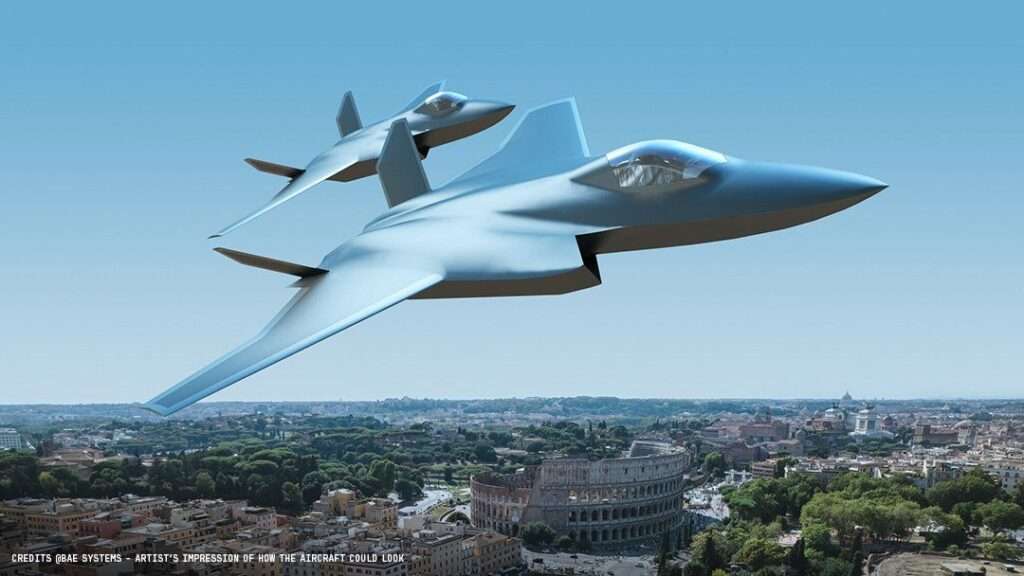
The next generation is planned to enhance these capabilities even more with artificial intelligence, autonomous drones, and hypersonic weaponry, making close-range aerial battles increasingly unlikely.
1. Beyond Visual Range Combat Will Dominate
One of the primary reasons dogfighting may disappear is the rise of extreme long-range combat.
Sixth-generation fighters are meant to destroy adversary aircraft long before the pilots see them. Advanced sensors and powerful radar systems enable these jets to detect and track targets over long distances.
They will also carry next-generation air-to-air missiles capable of striking targets well beyond visual range. These missiles can monitor airplanes with improved seeker technologies and precision targeting systems.
In practical terms, a future air combat could look like this:
Two aircraft detect each other from hundreds of kilometers away.

Both deploy long-range missiles.

The duel is determined before either pilot can see their opponent.
If airplanes are destroyed at such distances, the classic close-range dogfight will never occur.
2. AI will react faster than humans.
AI integration is another breakthrough characteristic of sixth-generation aircraft.
Future fighters will rely largely on AI to analyze data, recognize threats, and make tactical decisions quickly. AI systems can process massive volumes of data and respond far more quickly than human pilots.
These systems can do the following:
Analyze radar and sensor data in real time.

Predict adversary maneuvers.

Automatically select the best weapon.

Calculate the ideal evasion paths.
AI can process thousands of data points per second, resulting in significantly faster reaction times during combat.
Because of this speed advantage, battle judgments may be made in milliseconds, significantly faster than human responses. In such a setting, navigating skill is less important than computational capability.
In other words, the conflict may be fought by algorithms rather than humans.
3. Drone “Loyal Wingmen” Will Transform Air Battles
Unmanned combat drones, often known as loyal wingmen, are planned to accompany sixth-generation fighters on their missions.
These drones will accompany the main fighter jet and carry out several tasks:
Scouting enemy positions.

Jamming radar systems.

Launching missiles.

Acting as decoys

Absorbing enemy strikes.
In many circumstances, a single fighter could control many drones simultaneously.
This concept is referred to as Manned-Unmanned Teaming (MUM-T). Instead of a single aircraft attacking another, air battles could encompass large networks of human fighters and autonomous drones cooperating.
Drones can engage foes first, therefore manned aircraft may never get near enough for a dogfight.
4. Hypersonic missiles will reduce reaction time.
Future fighter jets are projected to carry hypersonic missiles capable of speeds greater than Mach 5.
Hypersonic missiles can reach their targets so swiftly that the enemy has little time to respond.
For example:
A Mach 5 missile travels at more than 6,000 kilometers per hour.

At that speed, an airplane hundreds of kilometres away may be struck within minutes.
Traditional dogfighting is based on maneuverability and reaction time. Hypersonic weapons negate this advantage by making confrontations incredibly quick and long-range.
The faster weaponry get, the less probable pilots will engage in close battle.
5. Advanced Stealth will prevent detection.
Sixth-generation fighters are intended to have multispectral stealth, making them tougher to detect across many sensor types.
These aircraft may hide from:
Radar

Infrared sensors

Electronic detecting systems.

Visual tracking
Advanced stealth materials and designs reduce detection across several spectrums.
If an aircraft is not discovered until it is attacking, there may be no time for maneuvering fights.
Instead of two aircraft colliding and engaging in a turning combat, the encounter could finish before the target even realizes it is under assault.
6. Directed-Energy Weapons Can Replace Guns
Future fighter jets may also carry directed-energy weapons, such as high-powered lasers.
These weapons are capable of:
Destroy incoming rockets.

Damage the enemy aircraft.

Disable electronic systems.
Directed-energy weapons deal harm almost immediately, at the speed of light.
If lasers become effective enough, they might eliminate threats instantaneously, decreasing the need for traditional gun-based dogfighting.
In many ways, the gun that previously defined air combat may be eliminated from future aircraft designs.
7. Network-Centric Warfare Will Control The Battlefield.
Sixth-generation airplanes aren’t simply planes; they’re flying data centers.
The jets will be connected to:
Satellites

Ground radar

Other airplanes

Naval systems

Autonomous drones
This network will provide pilots with a complete real-time image of the battlefield.
This idea is known as network-centric warfare, in which information superiority determines victory.
If a fighter can detect attackers using satellite data or other aircraft sensors, it is not required to see them firsthand.
Again, this shifts battle away from close-range conflicts.
Could dogfighting still exist?
Despite these developments, some experts predict dogfighting will not go away completely.
Several elements may still contribute to close-range combat:
Electronic warfare has the potential to impair sensors.

Stealth vs. stealth fighting may lower detection range.

Missiles can fail or be intercepted.

Unexpected encounters may occur in chaotic warfare conditions.
In exceptional cases, aircraft may be able to get near enough for short-range combat.
Unlike classic turning dogfights, these confrontations will most likely be exceedingly brief and missile-based.
Future Role of Fighter Pilots
Perhaps the most dramatic shift is the pilot’s evolving position.
In previous generations, pilots were the primary fighters in air battle. Their expertise, reflexes, and maneuverability influenced the outcome.
In sixth-generation warfare, pilots may become combat managers.
Their roles may include:
Commanding Drone Swarms

Managing AI Systems

Coordinate networked assets.

Make strategic decisions.
Instead of flying boldly into conflict, pilots may monitor automated systems that handle the actual fighting.
Sixth-generation fighter jets represent a paradigm shift in military aviation. With artificial intelligence, hypersonic weaponry, enhanced stealth, drone swarms, and network-centric warfare, the nature of air combat is fast evolving.
Traditional dogfighting, long a defining element of fighter aviation, may become extinct very quickly. Data, algorithms, and long-range precision weapons are more likely to determine future air battles than close-range maneuvering.
While dogfights may still occur in rare cases, they will no longer be the primary mode of aerial combat.
The skies of the future may be quieter, faster, and far more lethal—with the winner decided long before the pilots even meet.